
After Midterm Backlash, OpenAI Drops Data Center NDAs and Pledges Full Power Cost Coverage
OpenAI says it will stop using NDAs with public officials and will pay the full cost of the electricity and grid infrastructure its future owned data center campuses need.

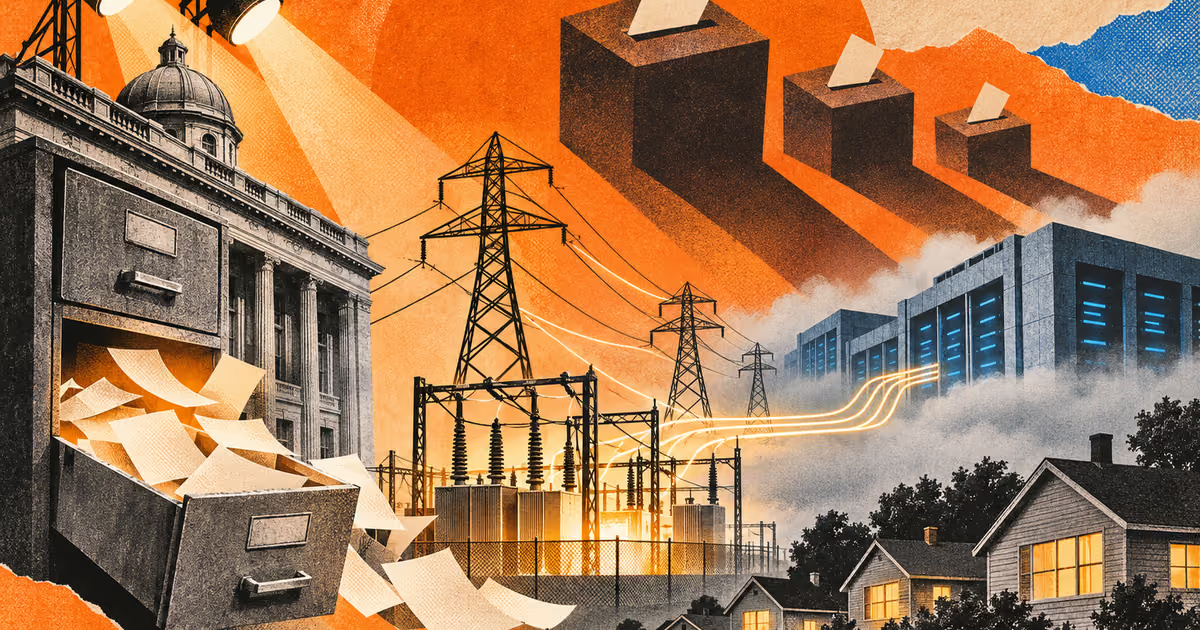
Two days after American voters turned against data centers at the ballot box, OpenAI is promising to stop doing the things that made people angry. No more secret deals with local officials. No more leaving neighbors to pick up the power bill.
On Thursday the company published what it calls a National Community Compact, a set of commitments for every future campus it owns and operates. The headline pledges are blunt: OpenAI will not use NDAs with public officials, and it will pay the full cost of the electricity it uses and the grid infrastructure needed to serve it.
The timing is not subtle. Tuesday's midterms were a rout for the industry's local ambitions, with voters backing limits on data centers in nearly every ballot measure and the issue helping flip governorships in Ohio and Texas. Secrecy and ratepayer risk had become political poison, and OpenAI is now rewriting its playbook for the sites it controls.
What OpenAI is promising
The NDA pledge has a carveout. OpenAI says it will keep narrow protections for legitimate security information, trade secrets and competitively sensitive material. Amazon made a similar move in October, saying it would no longer use NDAs with government agencies on data center projects.
On power, the company says it will provide financial assurances before major spending begins, so other utility customers are protected if a project is delayed, shrunk or canceled. That is aimed squarely at the fear that households end up paying for grid upgrades built for a campus that never fills up.
Each future campus also gets a local compact. OpenAI says it will engage residents early enough for their input to shape plans, name a local point of contact and report publicly every year. It promises a water plan per site, a preference for closed-loop or low-water cooling, published site-level water and electricity use, and independent noise studies before operations and annually after.
On jobs, OpenAI says it will publish expected headcounts, work with unions and training providers, and report on hiring and apprenticeships. It points to a $4.8 million grant in Effingham County, Georgia, covering free school meals for all 14,000 students, and a joint $6 million childcare commitment with SB Energy in Pike County, Ohio.
Writing the rules before someone else does
The bigger play is a Compute Campus Policy Blueprint, which asks lawmakers to turn these voluntary promises into law. OpenAI wants state utility commissions to require large electricity customers to cover the costs they add to the grid and protect everyone else if a project falls through. It also wants it made easier to connect campuses that can cut demand when power is scarce.
Its example is a planned Effingham County campus, where an agreement with Georgia Power lets the utility reduce delivered power by up to 1,000 megawatts during high demand.
The blueprint calls for public terms on any tax incentives, with measurable commitments and clawbacks, early sharing of purchasing plans with local suppliers, and hiring forecasts built with trade unions and community colleges. It also urges Congress to speed transmission upgrades and restore clean electricity tax incentives.
OpenAI frames the compact as a starting point that builds on its January Stargate Community commitments. The company wants the framework adopted into laws so residents never pay for a project's electricity. It is also rebranding the buildings themselves: in OpenAI's language, data centers are now "compute campuses."
The pledges cover only campuses OpenAI owns and operates, not every partner site carrying its workloads. With a Democratic Congress arriving and governors promising tougher rules, OpenAI is betting it is better to set the terms now than have them set for it.
Some offers on this page may be paid placements or contain affiliate links.
Subscribe to Techpresso
Free daily newsletter, read in 5 minutes.
Subscribe free