
A Judge Ruled a Flock Search Was Mass Surveillance After a Deputy Tracked a Woman Over Her California Plate
An Oklahoma deputy ran a stranger through Flock's camera network because her car had California plates. A federal judge just called that what critics always have: indiscriminate mass surveillance.
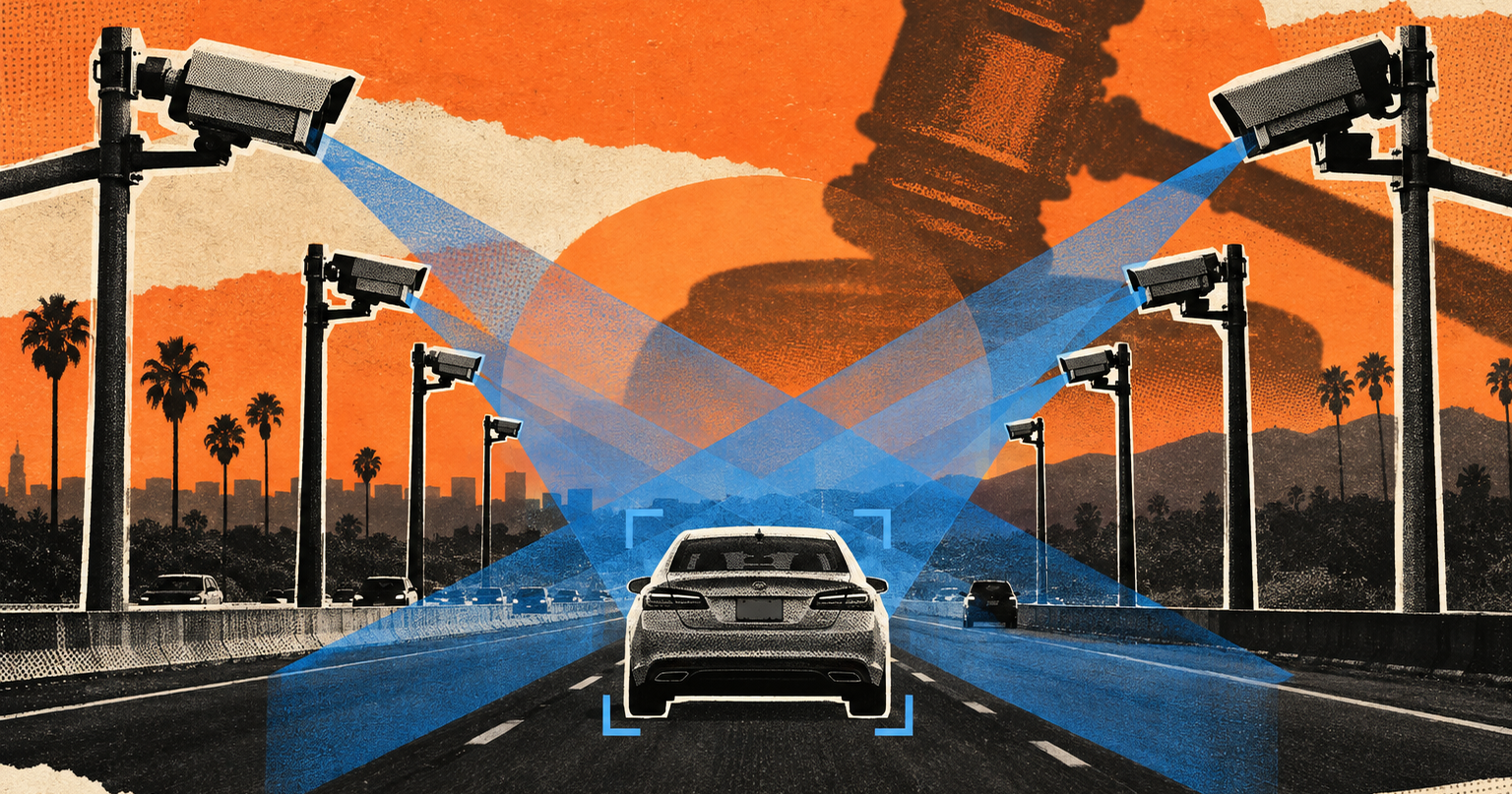
A Tulsa County sheriff's deputy saw a Mazda SUV with California plates roll past on an Oklahoma highway. That was the whole reason he followed it. He ran the plate through Flock Safety's license plate reader network without a warrant, and now a federal judge has ruled that search unconstitutional, calling the system "a type of indiscriminate mass surveillance."
The order, dated October 1 and first reported by 404 Media, came from Judge Sara Hill. It is one of the first times a federal judge has found a Flock search violated the Fourth Amendment.
One query, a month of movements
Deputy Freddie Alaniz's single query returned more than 50 records of the driver's movements over a month. They showed a short trip from Locust Grove, Oklahoma, to the California and Arizona border and back toward Missouri. Cameras on his own patrol car feed the same network.
He pulled the driver, Melisa Kyle, over for following another car too closely (Hill found that stop itself was lawful) and gave her a warning. Then he told her short trips to California usually meant drug trafficking. She refused a search, so he held her for a police dog. Officers searched the car, allegedly found 91 pounds of meth, and charged her with possession with intent to distribute.
Hill ruled both the extended stop and the Flock search unconstitutional and suppressed everything gathered after the search began as "fruit of a poisonous tree."
"Snooping through our personal lives"
"It is a tool that collects information about all vehicles that pass by any network-connected camera at all times, and it serves up the information to law enforcement on demand," Hill wrote, as TechCrunch reported. Tracking becomes "constitutionally problematic," she added, "when law enforcement can indiscriminately and passively catalog your whereabouts over an extended period of time and then use that information for any purpose whenever convenient."
"The government cannot go snooping through our personal lives and business without an adequate basis to do so," she wrote.
Against the grain of the case law
The ruling binds no one else, and it cuts against nearly every court so far. Three other federal courts in Oklahoma have said plate reader lookups are not Fourth Amendment searches, and in March the 5th Circuit upheld the readers. Neither the Supreme Court nor the Tenth Circuit has settled the question.
Those courts lean on United States v. Knotts, a 1983 case about a radio beeper in a chemical drum, which held there is no reasonable expectation of privacy on public roads. Hill argued Flock is "approaching the dragnet type law enforcement practice" Knotts left open. She relied instead on Carpenter, the 2018 cell location records case, and this year's Chatrie decision, in which the Supreme Court found police access to phone location history is a search.
Flock told 404 Media the ruling "goes against the overwhelming weight of authority in similar cases across the country, including multiple recent decisions in Oklahoma, and we expect it will be appealed and ultimately overturned." The company noted it was not a party and said the decision does not affect police use of its cameras.
A company under pressure
The ruling lands as the backlash gets louder. Police run more than 100,000 warrantless Flock searches a month, according to audit logs seen by 404 Media. On Friday, Senator Bernie Sanders introduced the Block Flock Act to bar federal agencies from using automated plate readers, following the No FLOCK Act two House members proposed in September. Florida and Texas have moved against the cameras too.
CEO Garrett Langley has called for a "compromise" between privacy and safety and apologized to women stalked by officers using Flock, and the company has reportedly offered staff voluntary buyouts as cities dump its cameras. Flock is betting an appeals court will undo Hill's ruling. Until one does, a federal judge has put the words "mass surveillance" in the record.
Subscribe to Techpresso
Free daily newsletter, read in 5 minutes.
Subscribe free