
Europe Wants More Money From Apple, Google, and Meta, and It's Disguising the Tax So Trump Won't Retaliate
Brussels wants a bigger cut of Big Tech's European revenue, but a digital tax would invite Trump's tariffs. So it's dressing the levy up as a charge on every giant company, banks and manufacturers included.
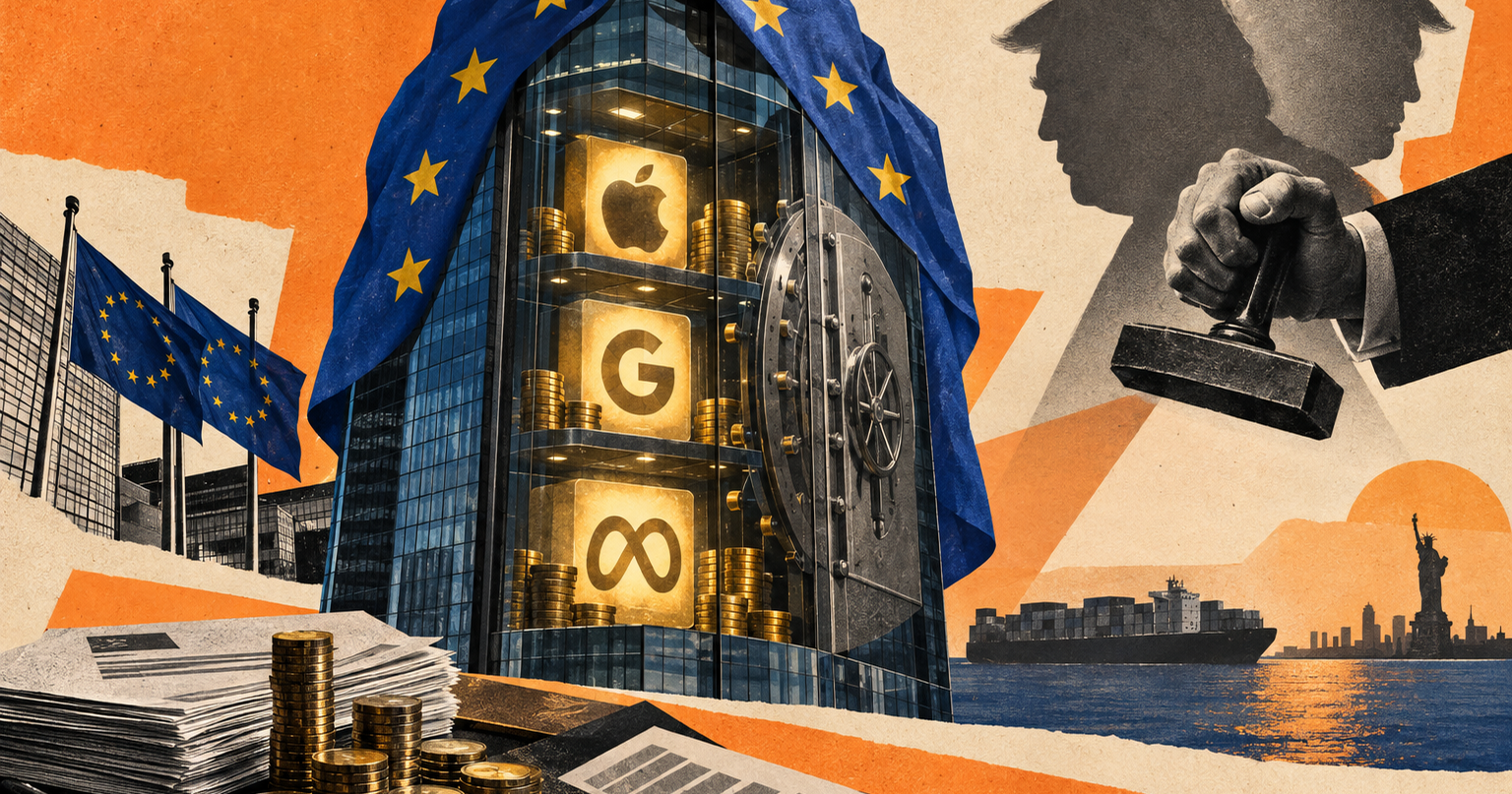
The European Commission wants Apple, Google, Meta and the rest of Silicon Valley to pay more into its budget. It also really doesn't want to hand Donald Trump an excuse to slap tariffs on European goods. Its solution, still under discussion, is to stop calling it a tech tax at all.
Six officials familiar with the talks described the plan to the Financial Times. Instead of a digital services tax that names tech companies, Brussels would expand an existing proposal called the Corporate Resource for Europe, or CORE.
A levy with camouflage
The Commission introduced CORE in July 2025 as a new revenue source for the EU budget. As drafted, it asks companies with more than €100 million in yearly EU revenue to pay a fixed annual lump sum of between €100,000 and €750,000. For a company the size of Apple, that is a rounding error, which is why Brussels wants to rework the lump sums so the biggest players pay a lot more.
Officials are now discussing changing the thresholds and contributions so the levy only covers very large corporations. That would squeeze more out of tech groups and quiet complaints that CORE would hit medium-sized European firms. Crucially, the bill would also land on European manufacturers, retailers and banks, which makes it hard for Washington to call it discriminatory.
"Some (EU) capitals are opposed to a pure digital tax because they don't want to upset the Americans, and many more are opposed to CORE," one EU official told the FT. The answer, the official said, is to expand it "to cover pretty much all the big companies."
Nobody has picked a number. The plan is to get all 27 member states to agree on the principle first, and any one of them can veto. Published documents say only that the levy would be "differentiated per companies' net turnover." It would sit inside the EU's next long-term budget, which runs from 2028 to 2034. And the idea faces resistance at home, not just from the US.
Europe has been here before
Brussels has tried to tax Big Tech and flinched several times. EU finance ministers abandoned an EU-wide digital tax in March 2019. That same year, the US Trade Representative prepared duties of up to 100% on $2.4 billion of French goods over France's own digital services tax. When the Commission's budget drafts leaked in July 2025, a digital levy aimed at US tech had quietly disappeared under American trade pressure.
France, Italy, Spain and Austria went ahead with national digital taxes anyway. Then in June 2026, Trump threatened a 100% tariff on goods from any country that imposes a digital services tax on US companies. A global OECD minimum tax deal, which Apple had backed, was supposed to settle all of this, until Trump pulled the US out.
The timing is touchy. Washington has been openly siding with its tech giants against Brussels, with the Justice Department backing Musk against the EU's €120 million DSA fine on X. A levy that looks like it was written for Cupertino and Mountain View would be an easy target.
So the bet is that a tax on everyone big is harder to retaliate against than a tax on Americans. No US official has publicly responded yet. Whether Trump's trade team buys the disguise is the whole question.
Some offers on this page may be paid placements or contain affiliate links.
Subscribe to Techpresso
Free daily newsletter, read in 5 minutes.
Subscribe free