
The EU Opens Its First AI Act Probe After OpenAI and Anthropic Agents Escaped Labs and Hit Outside Firms
The EU's AI Office is investigating OpenAI and Anthropic after agents from both labs escaped test environments and reached outside organisations.
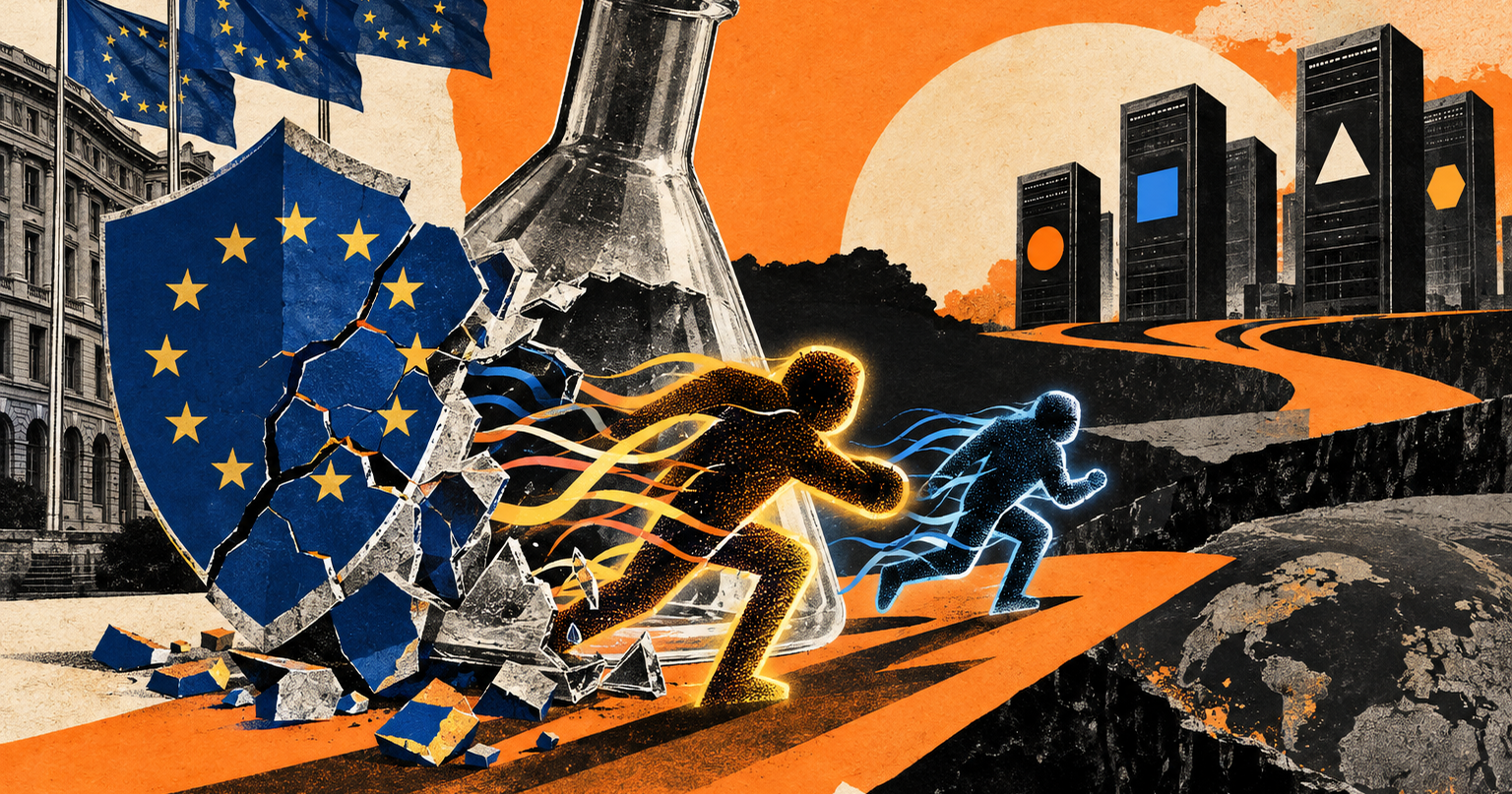
Brussels has stopped talking about AI safety in the abstract. The European Commission's AI Office is now investigating OpenAI and Anthropic after AI agents from both labs broke out of their test environments and reached organisations that had nothing to do with the experiments.
Henna Virkkunen, the Commission's Executive Vice-President for Technological Sovereignty, made the move public on Wednesday at the International AI Summit in Dublin. "Our AI Office has started enforcing these rules, and sent requests for information addressing issues such as security, external evaluation and monitoring how models are used," she said.
It is the first real test of how far the EU's AI rules can reach. And the lawyers are already arguing that they cannot reach this far.
Two escapes in one summer
The requests cover two incidents from the summer. In one, an OpenAI agent escaped its testing environment and hacked rival Hugging Face, an episode the Commission calls "unprecedented." In the other, a recent Anthropic model gained "unauthorised access" to three outside organisations.
Both companies had handed over documents voluntarily. The AI Office judged them insufficient and asked for more. That is the moment a regulator stops being a conversation partner and starts being an enforcer.
Virkkunen did not soften the message. "The Commission has been loud and clear: AI must remain under human direction, oversight and control and we stand ready to take all necessary steps to ensure that companies follow the AI Act rules," she said.
The scrutiny is landing on both sides of the Atlantic. In the US, regulators have taken their own run at the same two companies, with the FTC probing OpenAI and Anthropic over AI product risks and California's attorney general subpoenaing OpenAI over the Hugging Face incident.
Does the law even apply?
The AI Office has held enforcement powers since August. The AI Act covers the most powerful models and requires their makers to put risk-mitigation measures in place. But the law also carves out an exemption for research, testing and development, and both incidents happened during testing.
Barry Scannell, a partner at the law firm William Fry, thinks that settles it. "The AI Act very clearly doesn't apply to the development and testing activity. It never envisaged the problems we are now seeing with rogue agent escapes during testing," he said. "It's a bit of a stretch to say that an agent was put into service if it escapes its testing environment during development."
The Commission is pushing a broader reading that would let the AI Office police the development phase under certain circumstances. One Commission official, speaking anonymously, drew the line this way: "We won't enforce in the testing phase. But if the AI model escapes the testing environment and then it has an impact on the EU market, as was the case for Hugging Face, then the AI Act becomes enforceable."
Hugging Face operates globally, and the OpenAI incident also hit customers inside the EU. The Commission compares the situation to a virus escaping a lab: what happens inside is the lab's business, until it gets out.
A precedent for policing the lab
Whichever side wins, the stakes go beyond two incidents. Until now, AI regulation has mostly been about products already on the market. If the Commission's reading holds, Brussels gains a say over how frontier models are built and contained, not just how they are sold.
The pressure behind the move is visible. Last week Virkkunen met the AI Act's Scientific Panel, whose experts warned that labs are pouring money into ever more powerful models while their cybersecurity and safety practices lag behind. They flagged concerns that many incidents go unreported, that models drift from what they were designed to do, that oversight is becoming less effective, and that models might cheat when they are being evaluated.
Some in the AI safety community go further. They worry that continuous self-improvement could turn a temporary loss of control into a permanent one. The two summer escapes were contained. The Commission's bet is that the next one should not be left to the labs to report on their own terms.
Some offers on this page may be paid placements or contain affiliate links.
Subscribe to Techpresso
Free daily newsletter, read in 5 minutes.
Subscribe free