
Four Subscribers Sue Anthropic, OpenAI, Google and SpaceXAI Over Alleged AI Slowdown Cartel
A proposed class-action complaint filed 18 September 2026 in N.D. Cal. (3:26-cv-10693) accuses Anthropic, OpenAI, SpaceXAI, and Google of agreeing to slow consumer AI upgrades. Plaintiffs seek treble damages and an injunction. The claims are unproven.
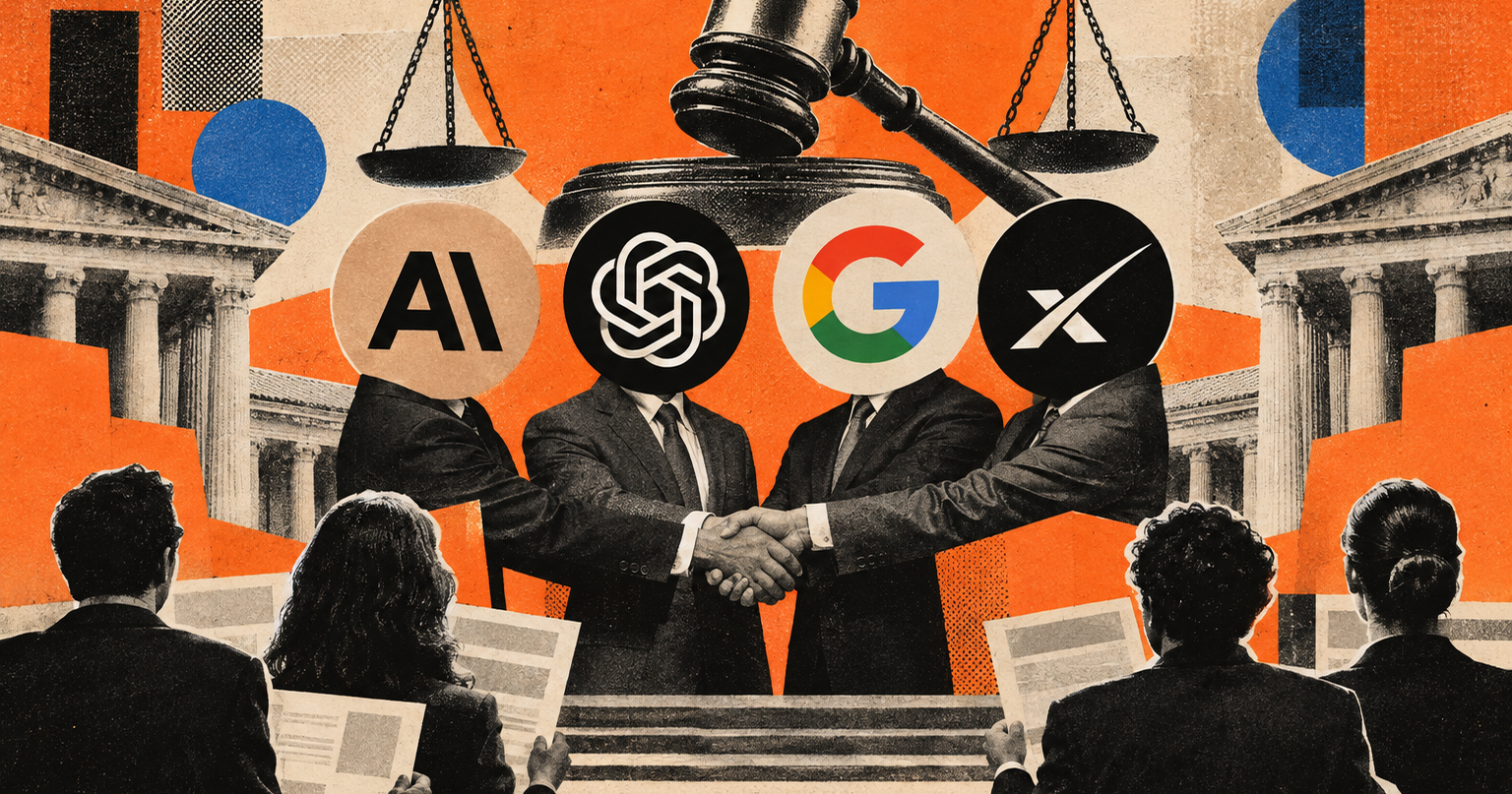
Four paid subscribers sued Anthropic, OpenAI, SpaceXAI, and Google on Friday, 18 September 2026, in the U.S. District Court for the Northern District of California, San Francisco Division. The filing is a proposed class-action complaint, case 3:26-cv-10693, captioned Buist et al. v. Anthropic PBC et al. It alleges a Sherman Act Section 1 agreement and asks for treble damages under Clayton Act Section 4 plus an injunction under Section 16.
This is a civil complaint with unproven allegations. It is not a Justice Department prosecution, not a jury finding, and not an admission by any lab.
The named plaintiffs are Charles Buist, Cheyenne Hunt, Christine Bullock, and Nick Spetsas. Each says they bought a paid individual subscription to Claude, ChatGPT, Grok, and/or Gemini. The defendants named are Anthropic PBC, OpenAI OpCo LLC, SpaceXAI LLC, and Google LLC.
The complaint says the four labs agreed to slow the pace at which they improve competing consumer AI products, cutting the quality subscribers get for the same price. POLITICO (Tyler Katzenberger and Christine Mui, 18 September 2026) reported that Anthropic, OpenAI, SpaceXAI, and Google did not immediately comment.
On the morning of 12 September 2026, Anthropic CEO Dario Amodei published an essay titled We Must Pace the Frontier. The complaint says the essay called for industry-wide coordination and limits on the rate of unchecked AI progress so labs could slow "without sacrificing commercial advantage." Within about an hour, Elon Musk quote-posted "Dario is right." The same day Sam Altman said he agreed to pace the frontier, and Demis Hassabis called it "the right path forward" and tied it to his proposed industry standards body.
On 14 September, Altman said AI progress "should be slower than it otherwise could be" and that OpenAI would not wait for an antitrust exemption. On 15 September, OpenAI Global Policy Chief Chris Lehane confirmed weeks of collaboration with Anthropic and Google DeepMind. Public agreement with a safety essay is not the same as a proven cartel. Defendants can still argue First Amendment petitioning, unilateral safety choices, or that no agreement exists.
The proposed nationwide class covers paid U.S. subscribers from 12 September 2026 onward. Plaintiffs say they support AI safety, but they argue safety has to come from each company acting alone or from government regulation, not from a deal among competitors.
Related tape includes the labs' joint standards-body talks, China calling slowdown warnings fear mongering, and Anthropic's enterprise frontier safeguards.
If you pay for Claude, ChatGPT, Grok, or Gemini, decide this week whether to stay on that plan after 12 September and keep the billing records that would put you in the proposed class.
Subscribe to Techpresso
Free daily newsletter, read in 5 minutes.
Subscribe free